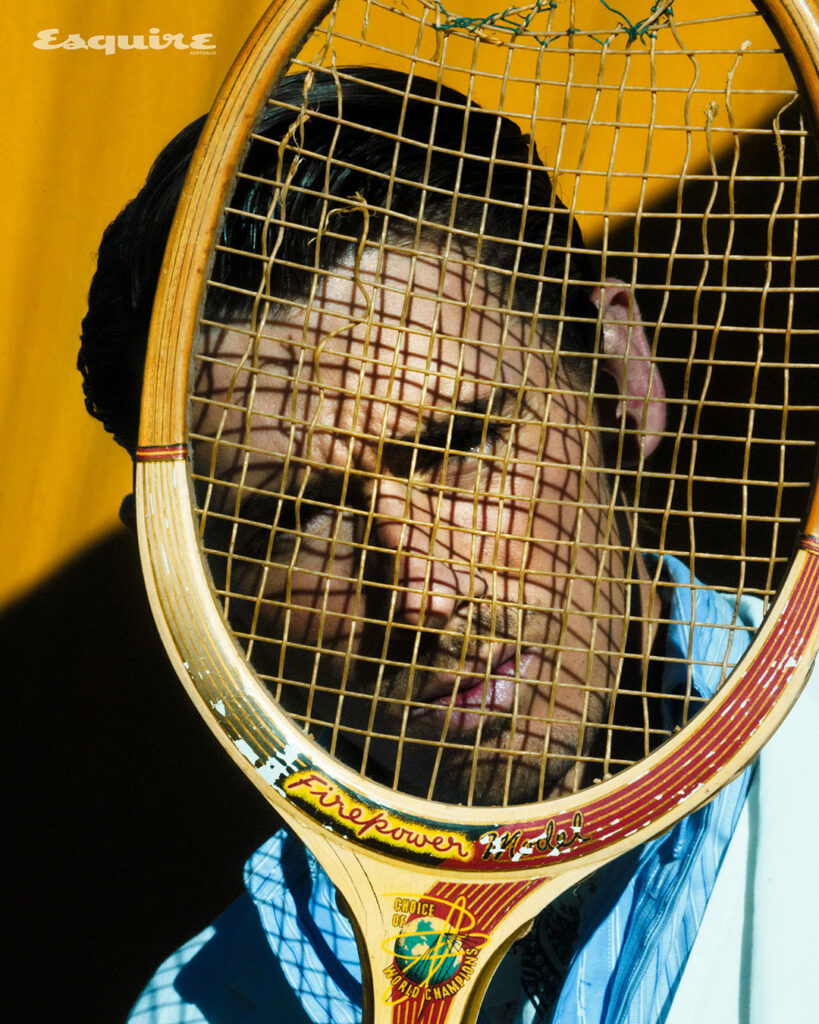
TIMING, all too often, is outside our control. So it is on this spring afternoon, when Esquire meets with Alex de Minaur for a collaboration arranged months in advance. The air is warm, dry and still, ideal for a photo shoot on a residential court in Sydney’s Eastern Suburbs. A far cry from the intense heat and public scrutiny that he has be known to perform under. 

De Minaur arrives in the backseat of an Uber. As he alights, you take in the familiar presence: lean and floppy-haired, though dressed not in tennis kit but jeans and a navy T-shirt. It is your second face-to-face interview in the last few years – your third by any mode since 2019 – but if he recognises you, he doesn’t let on. He’s quite inscrutable, this Alex de Minaur, the world No. 7. Unfailingly polite, but not a gusher; not one to turn on the charm. 

De Minaur had managed a redemptive, if ultimately inconsequential, win the previous day, and you offer congratulations. 

“Thank you,” he says, neutrally.  

Inside the house, he takes a seat at the dining table and tucks into a ham-and-salad roll. Then he’s summoned to the makeup chair, and you start chatting. 

When a tennis player intrigues you, it’s generally because of what they can do with a racquet, combined perhaps with elements of style, demeanour or appearance. With de Minaur, however, there’s something else you can’t ignore: the fact he’s achieved what he has on the strength of qualities that, as the mental-skills coach Allistair McCaw puts it, “require zero talent”. Don’t misunderstand: de Minaur is athletically gifted, though perhaps no more so than the guy ranked 150 in the world. Where he’s exceptional is in areas not readily detectable in highlights reels: diligence, determination, resilience. At times, opposed to taller, more elegant, more powerful rivals, he can take on the appearance of the earnest eager beaver, dashing this way and that. Roughly seven times out of 10, though, when the match is over, it’s de Minaur who’s packing his bag with a smile creasing his boyish face.  

Where he's exceptional is in areas not readily detectable in highlights reels: diligence, determination, indefatigability, resilience.

In a professional career that began in 2015, he’s collected 10 ATP singles titles, nearly $40 million in prizemoney and untold fans. His forte: defying expectations. Repeatedly during his decade on the circuit, even his admirers have said he’s gone as far as he can – and every time, de Minaur has responded by going further. Still, however, he’s unsatisfied. He yearns to make major semi-finals and finals; come January, he wants to become the first local man to win the Australian Open since 1976. That’s right, 1976, when the Ted Mulry Gang released ‘Jump in My Car’. 

“I think, as you go on your journey, you set different goals for yourself, and my goal right now is to break new barriers,” de Minaur says. “And the way I am, I want it really badly.” 

Those two brutal losses? The first was a US Open quarterfinal, on September 4, to Canadian Félix Auger Aliassime. No disgrace there – in his six matches at Flushing Meadows, former prodigy Auger Aliassime produced his best stuff in years. But de Minaur was inconsolable. All he knew was that, in his sixth attempt to clear the quarters at a grand slam, he’d lost not to a Djokovic, a Sinner or an Alcaraz but a lower-ranked player. Worse, he’d tightened up in crucial moments, a self-sabotaging habit that’s hardly unique to de Minaur, but which has cost him more dearly than most. “It’s very tough when you work so hard for something and you are constantly putting yourself in positions to, in a way, prove people wrong, but yet again, you kind of fall,” he told the Flushing Meadows press pack. 

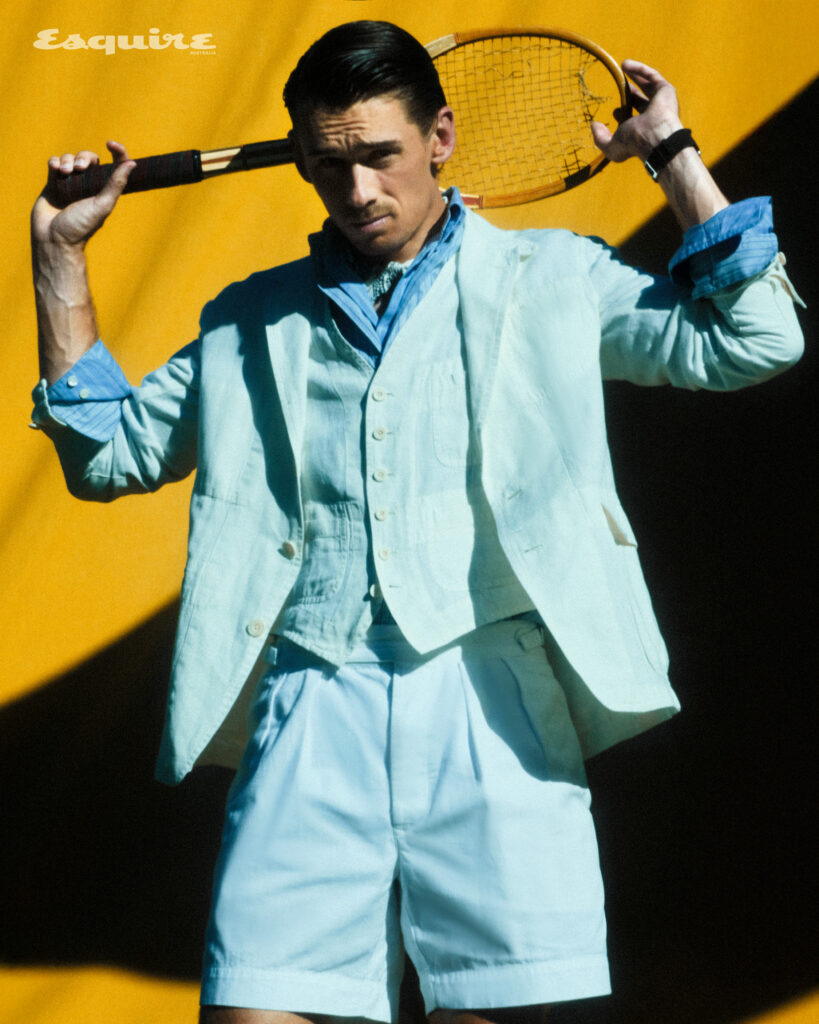
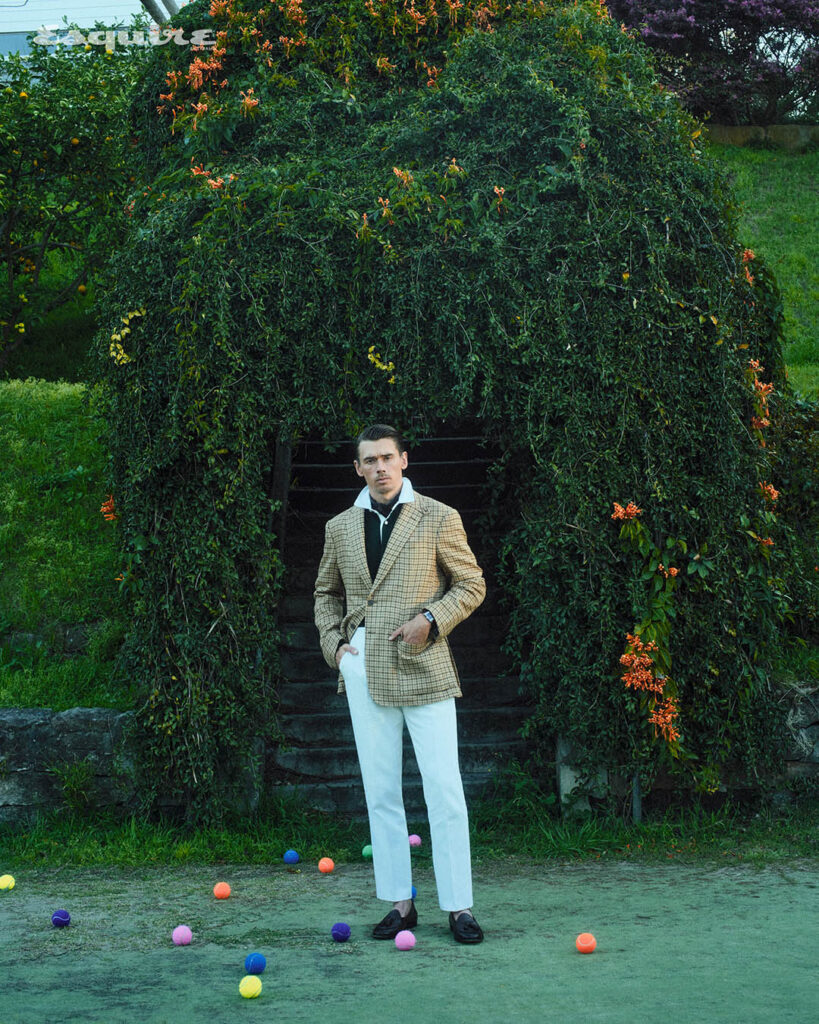
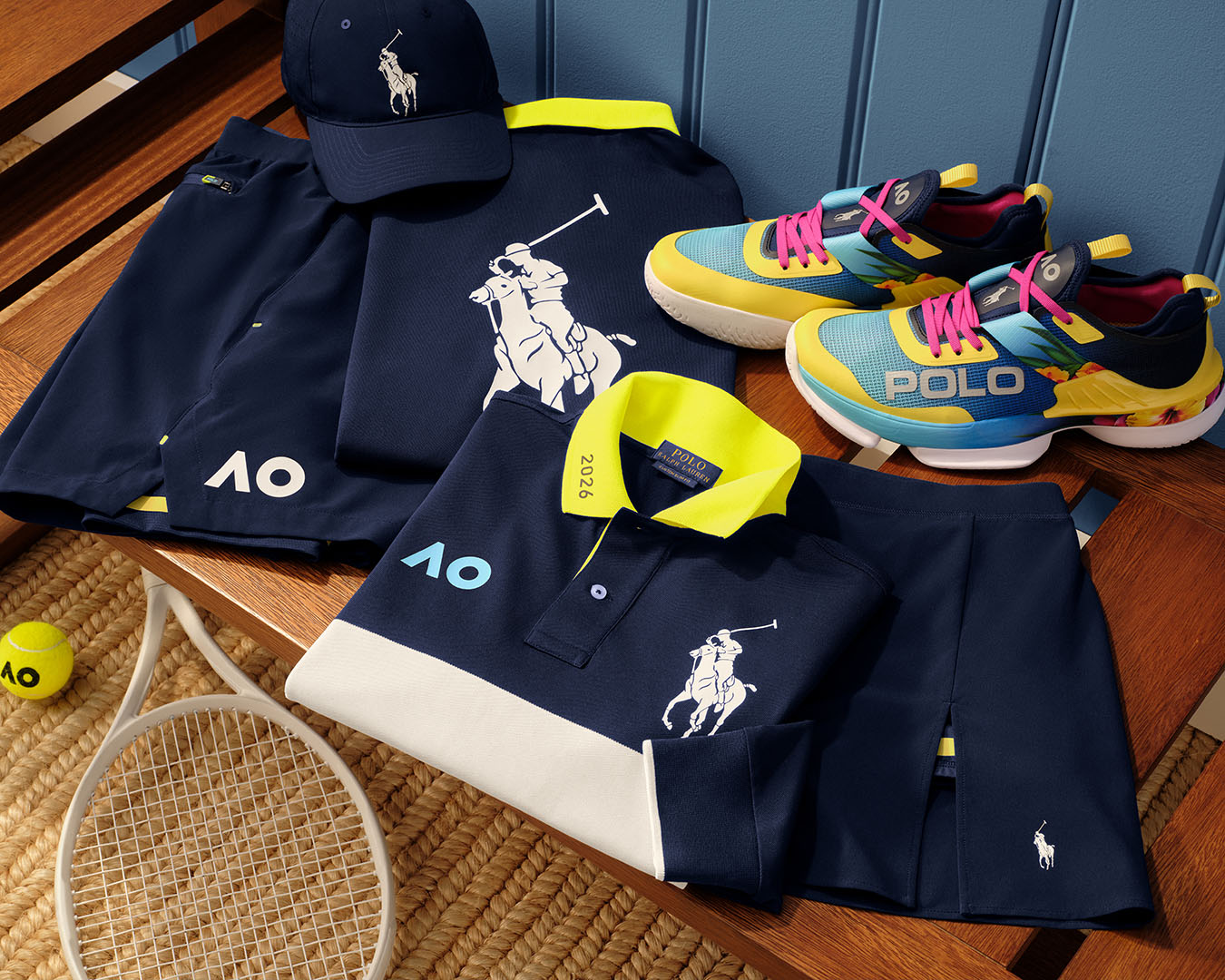
Alex wears Polo Ralph Lauren clothing; Jaeger-LeCoultre Reverso Tribute Duo Face Small Seconds timepiece

Eleven days on, that loss still stings. Oh, to play the match again, he says, and this time, “play it like it was any other match, like it wasn’t the quarterfinals of a slam”. It’s asking a lot. But that’s the bold yet breezy mindset de Minaur wants to foster. 

The tennis caravan rolls on. Just over a week after succumbing to Auger Aliassime, de Minaur was centre stage in his birthplace of Sydney, playing the opening rubber of a Davis Cup tie against Belgium. His opponent was the uncelebrated Raphael Collignon, the world No. 91. Almost everyone expected de Minaur to win, but, you know, the glorious uncertainty of sport and all that. With little to lose, an inspired Collignon silenced a parochial Australian crowd. “One hundred per cent, I beat myself up after that loss,” de Minaur says. 

Is he prone to sulking? De Minaur emits a short, mirthless laugh. “Well, I have gotten better of late. It [moving on from a loss] used to take me a while. I’ve never been the best loser. But I’ve learnt that you play a million matches in your career. Every week, there’s a new chance, a new opportunity, so it’s all about having the memory of a goldfish.” 

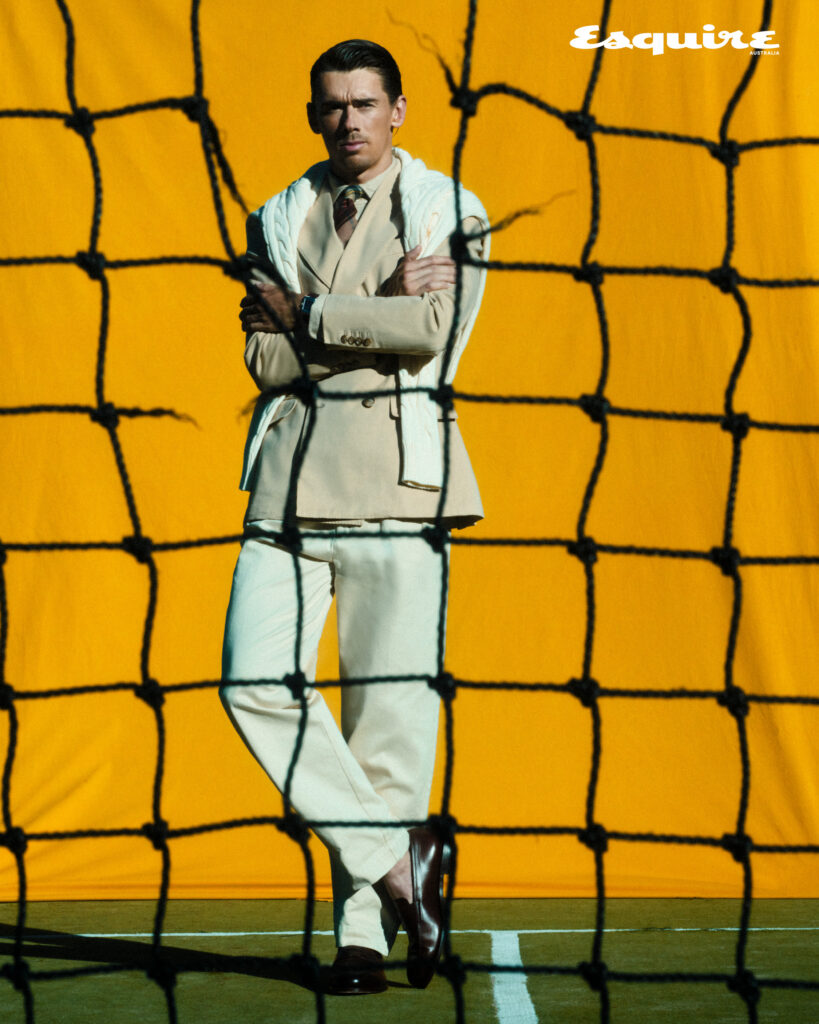
All clothing by Ralph Lauren Purple Label; Jaeger-LeCoultre Reverso Milanese in Pink Gold timepiece

WHAT LIVES RENT FREE in the mind of Alex de Minaur, 26, is a question: How can I get better? It’s a challenge that evokes one of Rafa Nadal’s signature epigrams, spoken in 2019 when asked what the notoriously distractable Nick Kyrgios might have achieved had he committed himself to tennis with Nadal-like focus. 

“If, if, if doesn’t exist,” Nadal responded, with a mix of bemusement and irritation. 

In matters of attitude, de Minaur is the opposite of Kyrgios – and much more like Nadal. Every point: life or death. Every practice session: an opportunity to improve. In between tournaments, he submits to ritual suffering, on the court and in the gym. There are no ‘ifs’ with de Minaur. He may retire five years hence without a major. But he shouldn’t retire with regrets. 

Would he agree that tennis at his level is the constant search for microscopic improvement? “One hundred per cent,” he says. 

All clothing by Ralph Lauren Purple Label; Jaeger-LeCoultre Reverso Classic Monoface Small Seconds in burgundy timepiece

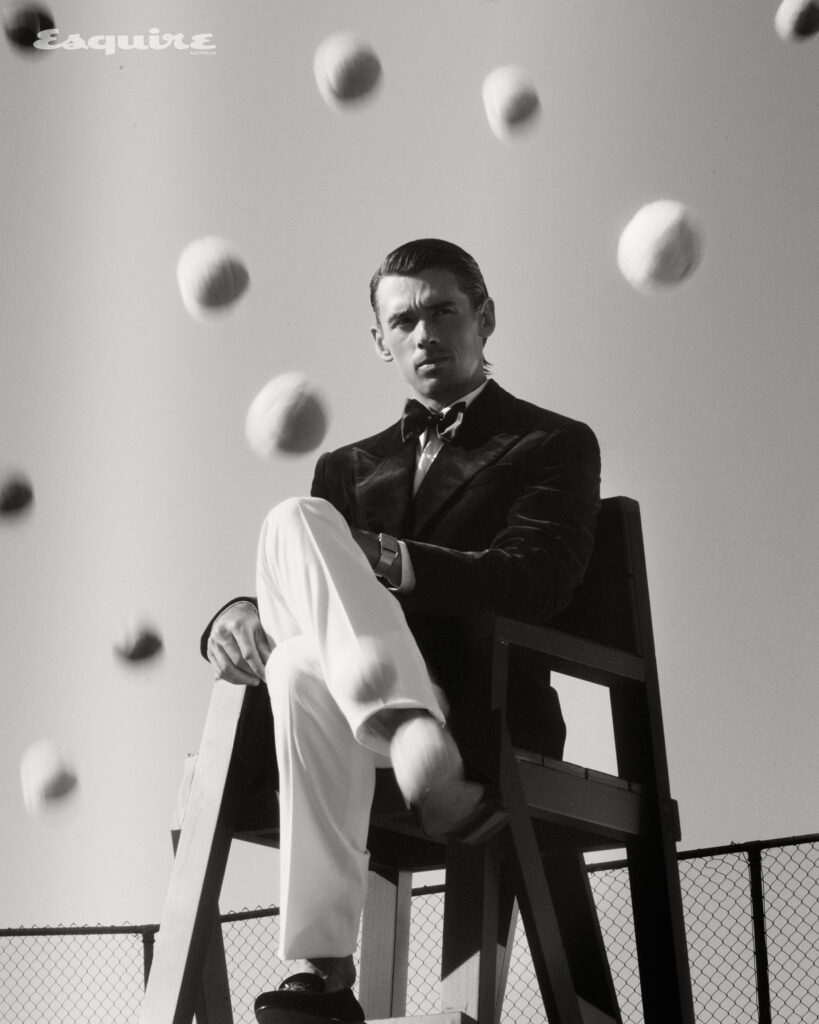
You’re on court with him now, in the sunshine, and it feels as though de Minaur’s spirits have lifted. He’s between fashion looks and the first round of images is arresting. It may have served as a fillip.  

“I mean, you get to a certain level where everyone knows how to hit a tennis ball, everyone is super professional, everyone competes really well, so you’re looking for the tiniest of edges against your opponents. So, ultimately, as you get to the highest level, the margins are smaller and smaller, and you’re searching for these ways to improve, but it’s even harder than you can ever imagine.” 

So where does he put his focus these days – on the technical, the strategic, fitness? Almost imperceptibly, de Minaur shakes his head. “Look, I think a lot of it is mental. I’ve got to get to the stage where I believe in myself as much as my team does. They have so much belief in me and my level, and I’ve got to match that energy.” 

All clothing by Ralph Lauren Purple Label; Jaeger-LeCoultre Milanese timepiece

De Minaur’s not talking about a general lack of self-confidence but rather that tendency on the biggest points on the grandest stages for traces of self-doubt to creep in, enough to cause his first serve to desert him or his groundstrokes to wane. “Yep, it’s having that belief, that swagger about you,” he says. “Sometimes I’m too hard on myself. I don’t give myself enough credit. It’s just realising that I am good enough. I’m capable of doing some pretty special things in this sport, and, ultimately, it’s up to me to show up.” 

Precisely because de Minaur works so tirelessly on his game, he suffers occasional existential crises around issues of justice or fair reward for effort. As a member of the ’90s-born group of players (known as tennis’ lost generation), he’s operated across two devilishly challenging eras: just when Federer-Nadal-Djokovic was winding up after roughly 20 years of dominance, the Alcaraz-Sinner duopoly took over. Why, de Minaur has wondered in his darker moments, can’t tennis be more like school, where if you knuckle down for a term, your grades will improve? In sport, you can’t assume that knuckling down will deliver a tangible reward. On this topic, the former New Zealand rugby league coach Graham Lowe had his own epiphany. Inconsolable after a last-minute Test match loss to Australia, Lowe finally realised that no amount of work guarantees success – it will give you only the opportunity to succeed. 

De Minaur has come to a similar judgement. “The mindset I have is, improvement is sure as hell not going to happen without hard work,” he says. “Yes, you can put in all the hard work, and the results don’t come. But there’s a lot more chance of those results coming if you’re putting in the hard work than if you’re not.”

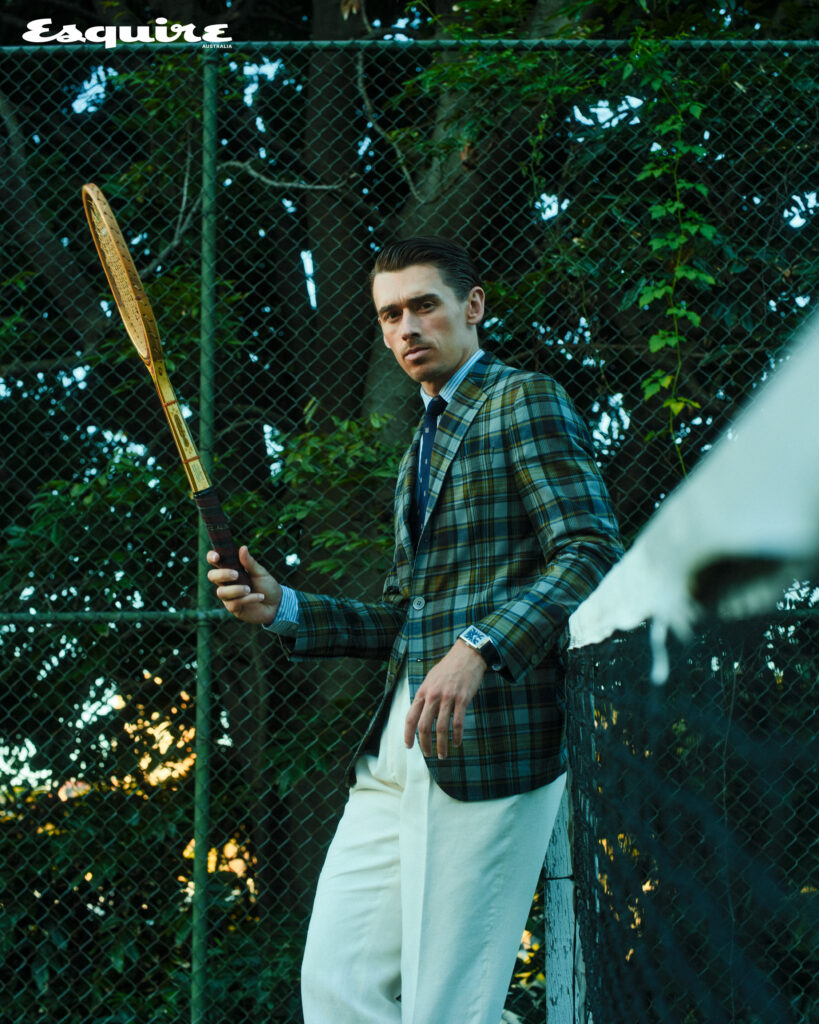
All clothing by Polo Ralph Lauren; Jaeger-LeCoultre Reverso Geographic stainless steel in navy timepiece
"Ive never been the best loser. But every week, there's a new chance, so it's all about having the memory of a goldish."

In the meantime, de Minaur has lent on another defining trait: an ability to absorb tennis’ never-ending setbacks with impressive equanimity. On-court rants, racquet smashing, confrontations with umpires, sniping at his box, churlishness in the press room . . . none of these is part of the de Minaur way. While most players come to see that controlling their emotions is a prerequisite for winning, in de Minaur’s case, there’s something else at play: an ingrained decency. “It’s the way I’ve been raised, what I’ve always been told: your number one job as a player is to have a good attitude,” he says. “It’s about trying to set a good example. I know now I’m in a position where I’ve got the chance to inspire some kids and I just hope that I can be someone they can look up to.  

“As for media, it’s part of the gig. Everyone’s got an opinion and they’re going to say what they want about you. And I’ve used that to my advantage. If people don’t have the most positive things to say about me, I use that [to create] some more fire and desire to prove more people wrong.”    

All clothing Polo Ralph Lauren; Jaeger-LeCoultre Reverso Geographic stainless steel in navy timepiece

IN A LAID-BACK few minutes, while chatting with the Esquire crew, de Minaur bemoans the tour’s capacity to grind a man down, to deaden the spirit with the relentless carousel of flight-hotel-practice-defeat. In a perfect world, your sense of self-worth wouldn’t hinge on whether you won your last match. Often, however, in the microcosm of professional tennis, it does. 

De Minaur has spoken wistfully of his childhood, when hitting tennis balls was an exercise in joy. Could that feeling be recaptured? And if it could be, would it help? 

“It’s a great question,” he says. “All of us try to achieve that sense of playing fearlessly – not caring, in essence. But it’s easier said than done. But over the years, and even of late, I feel I’ve done a really good job of prioritising different things that allow me to play a bit more freely and not be as worried about the result.” 

Those things include hanging out with fiancée Katie Boulter, a British star on the WTA tour (their wedding will happen sometime in 2026, de Minaur shares). He’s also trying to immerse himself more often in interests divorced from tennis – watches, for example.  

“As men, it’s not often that we wear jewellery, so [a watch] is your way not only to appreciate a fine timepiece but to show your sense of fashion, show what you gravitate towards and express yourself that way,” says de Minaur.  

He extends his left arm to show you what’s on his wrist – a Jaeger-LeCoultre Reverso, his timepiece of choice for about a year. “I think it’s a very classic watch. I love the style of it, and it’s got a cool story as one of the first dedicated luxury sports watches.” As for the band: “I like a bit of everything,” he says. “I’m a collector, not only of watches, but cars, as well. I love having something for every occasion.” 

When he’s not living out of a suitcase, de Minaur relishes the chance to smarten up. “I like dressing nice,” he says. “I feel like I’m quite a classic guy in terms of the way I dress. Ultimately, it’s very simple, quite formal, but lately I’ve been venturing a little more out of my comfort zone. I like to get into causal clothes, whether it’s just to go for a coffee or to dinner. That’s my way of switching off from being a tennis player and being a normal human being.”

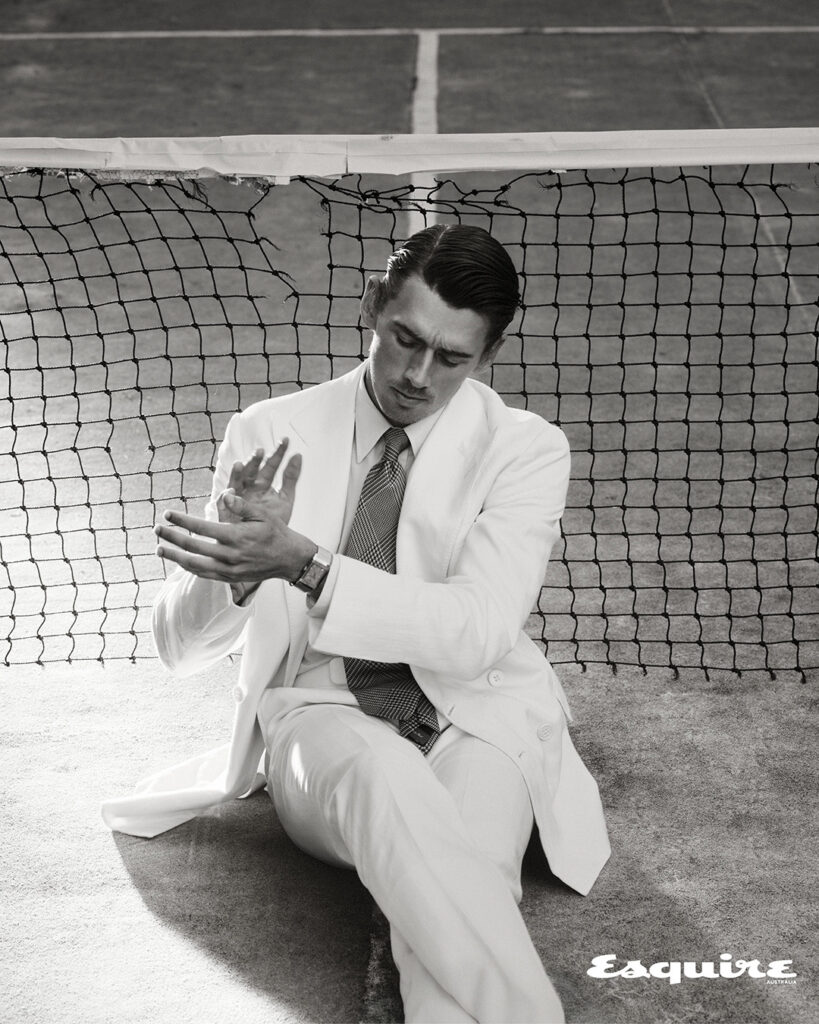
All clothing Polo Ralph Lauren clothing; Jaeger-LeCoultre Reverso Tribute Duo Face Small Seconds timepiece

That said, come next month’s Australian Open, you can count on de Minaur mothballing the “normal human being” lament. Now 50 years in duration, the drought of homegrown Australian Open men’s champions has become something of a national embarrassment. Pat Cash and Lleyton Hewitt went close in 1987-88 and 2005, respectively. Might de Minaur be The One? 

“It’s no secret that it’s where I most want to play well,” he says. “I want to play well in front of my people. Every year, you start there, and there’s the expectation [you’ll] do some damage . . . and hey, as soon as you win a couple of matches, the outside noise gets louder and it’s a bit of a catch-22. The outside noise [raises the pressure], but at the same time, it’s a good thing because it means you’re doing something right.”  

De Minaur has been doing plenty right for a long time. The question is, before he’s done with this tennis caper, can he do something truly stupendous?

Words: Dan Williams
Photography: Georges Antoni
Editor-in-Chief & Styling: Grant Pearce
Grooming: Daren Borthwick
Photographic assistants: Tommy Spence and Finn Cochran
Fashion assistant: Giselle Ingham
Advertisement - Continue Reading Below