





Five Fits With: alpine climber Benji Brennan
The Sydney-based professional climber and founder of Chhogori Designs chats with us about his style on and off the track, design inspiration and process, and climbing essentials
 By
By 
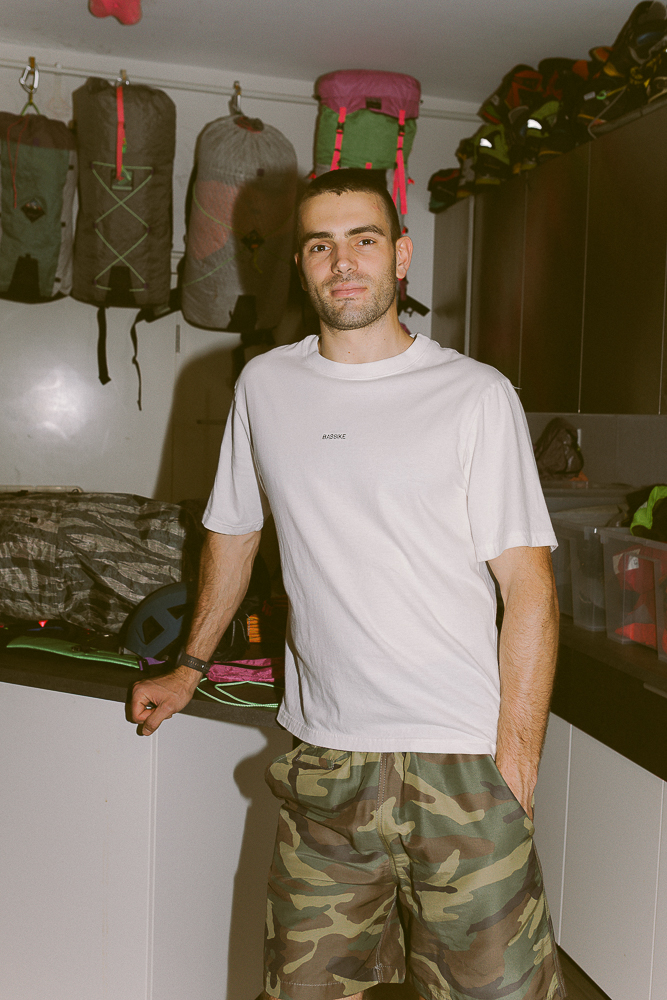
STYLE-WISE, Benji Brennan has always looked to the mountains. Growing up between Australia, the Middle East and the US, the 25-year-old alpine climber pored over what mountain bikers wore, influencing his personal style of baggy shorts and bright colours. And like the style cultures that surround skaters and surfers, a healthy obsession with gear and fabric.
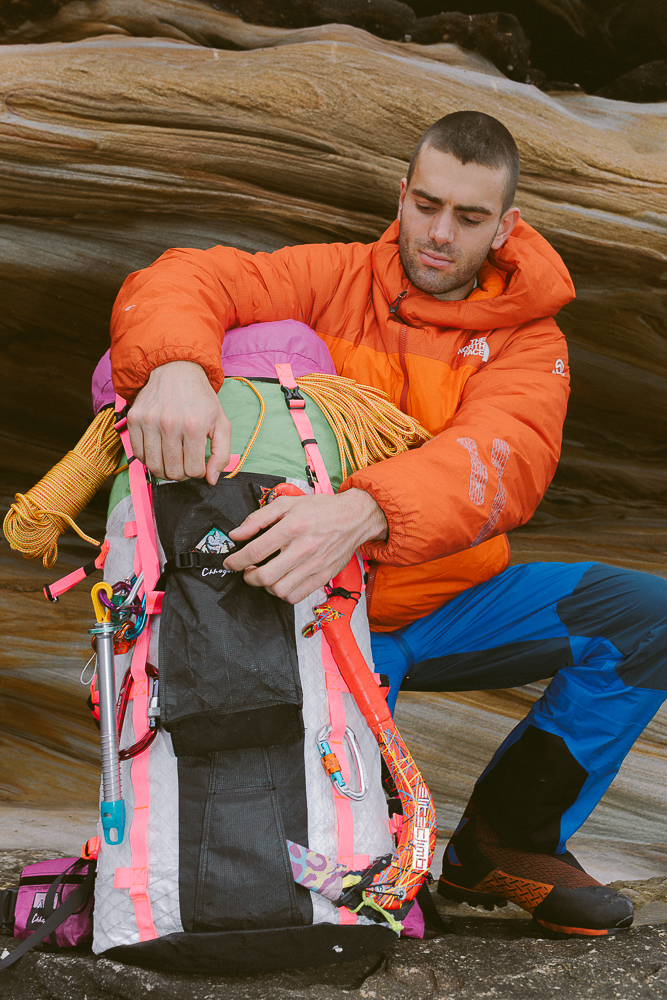
That all eventually fed into becoming a professional mountain guide and climber for Feeding the Rat Expeditions, which specialises in high-altitude journeys through remote China and Tibet, and earning a reputation in the mountaineering world as the go-to guy for road-testing gear. Recently, though, Brennan has started testing his own alpine equipment under his prototyping studio, Chhogori Designs.
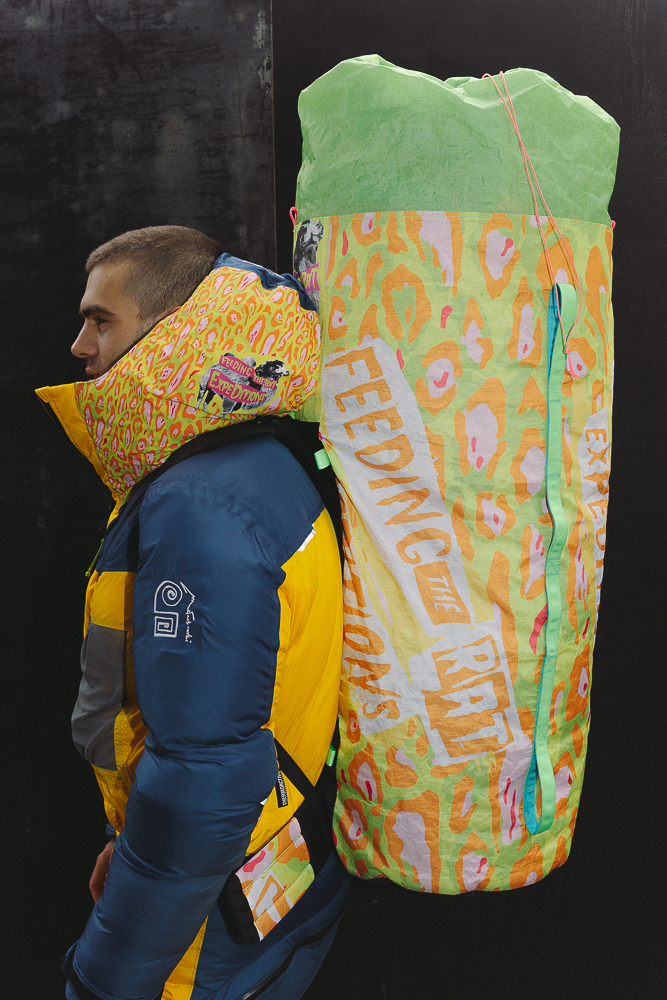
Creating alpine packs in acidic colourways, bold prints and contrasting mesh, Brennan’s designs recall the gear of the ’80s and ’90s. But it’s not just an aesthetic choice, as Brennan explains, but a matter of survival and staying noticeable against snow and rock.
Before heading off to put Chhogori to the test in the Gobi Desert and the mountains of Kofu, Japan, Brennan walked Esquire through five mountain fits built strictly for performance. What to pack, layer and wear when conditions shift, temperatures plummet and reliability become non-negotiable. Each look maps the realities of life at altitude, while still reflecting the design instincts that have shaped his own gear and evolving aesthetic.
Fit one
Esquire: Firstly, where did you grow up and where do you call home now?
Benji Brennan: I was born in Sydney and grew up a bit all over the place, spending time in the Middle East and then in the US. Sydney is home for most of the year now, but I spend the bulk of the northern hemisphere winter in a small city called Kofu, not far from Mount Fuji in Japan.
What was considered ‘stylish’ or ‘cool’ when you were growing up?
For me, it was seeing what mountain bikers were wearing at the time. I was really into the sport then, so that heavily influenced my taste. Baggy shorts, bright colours, mesh and big logos were all part of it.
When did you first become interested in clothing and style?
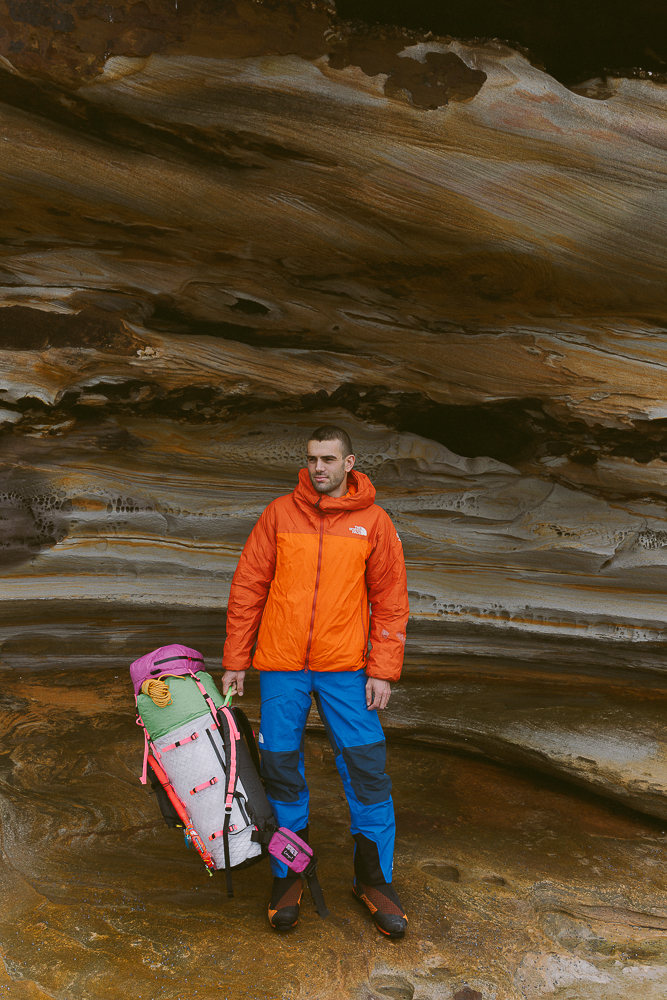
My interest in clothing really developed alongside climbing over the past decade. For me, it has always been pragmatic first. What works, what keeps you visible, what keeps you safe in the mountains. Bright and contrasting colours are not just an aesthetic choice but a survival tool. Against snow and rock, you want colours that never disappear.
Fit two
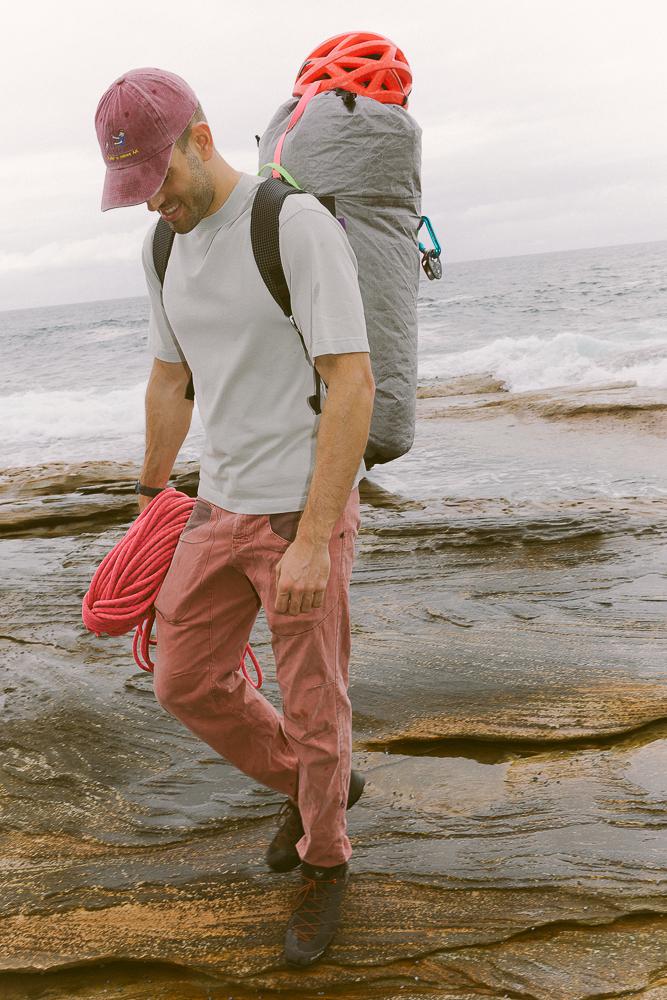
How would you describe your style for when you’re climbing?
I feel like climbing style really is driven by the practicality of doing your best to take on the extremes. A lot of the looks you see are combinations thrown together to make it work against the elements. With everyone’s personal preference, it’s a bit of a mishmash, which is fun because you don’t see much uniformity, and everyone’s a bit of a ‘style icon’ in a way.
When you marry gear driven by protection from the elements and years of testing aimed at ensuring you get up and down a mountain in one piece, you can end up with some pretty cool style outputs – you don’t need to look far past some of the sunglass designs to protect against the mountain glare to get the idea. I feel like it’s pretty cool to see how a lot of the practical choices people have made throughout the year have evolved into a style in itself that people are really getting into.
Tell us about how you got into climbing.
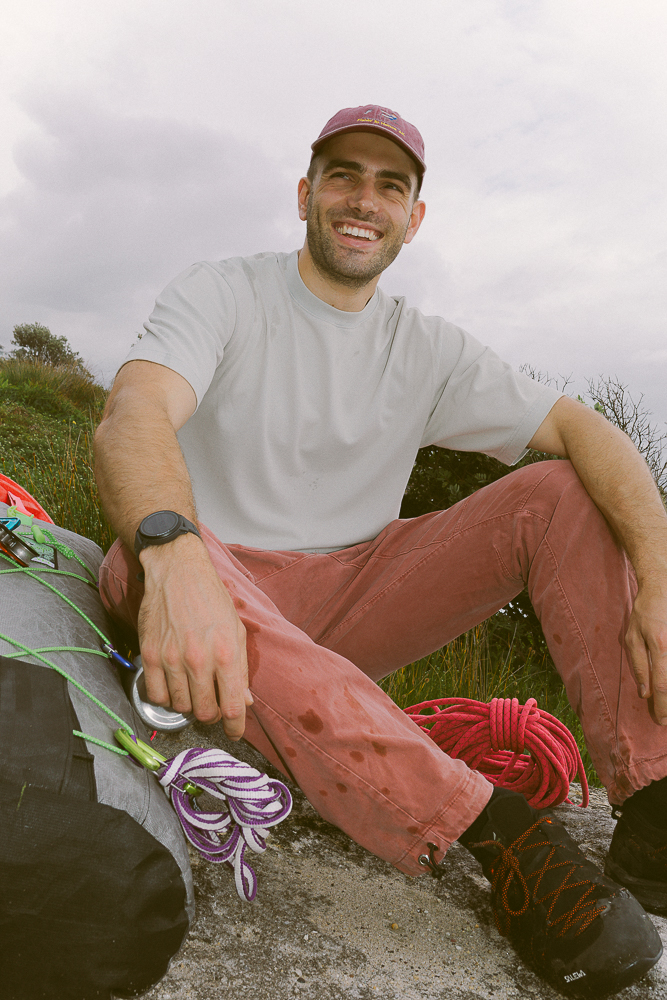
My family used to rock climb a bit when I was young, but nothing serious. I first started climbing on my own as a teenager, taking my uncle’s old gear down to the cliffs along the Sydney coast to spend days climbing up and down the sandstone. Sydney offers really great access to a wide range of rock climbing, whether it be sea cliff climbing or the adjacent Blue Mountains, and it gave me an accessible way to train, test out new gear and ideas.
The obsession for me wasn’t limited to the cliffs – to my parents’ dismay I once took to bolting a portaledge to the second storey of the family home, to get an idea of how it felt to spend a night in a tent dangling over the side of a cliff. Safe to say I was left with dozens of mosquito bites as a souvenir and a burning desire to give the real deal a go. After finishing high school, I got into alpine climbing properly, which included lots of ice climbing in Japan, and that eventually led to working as a climber for Feeding the Rat Expeditions. I still work with them today.
Fit three
You’re sort of the go-to road tester for some outdoor gear brands. How did those relationships start?
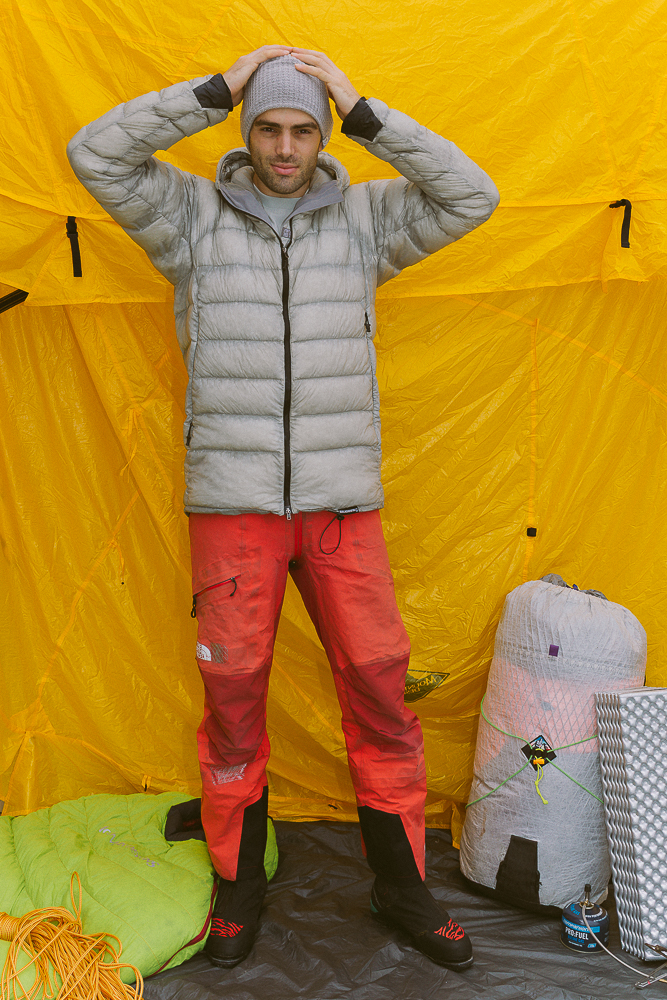
It all really started with my work with Feeding the Rat Expeditions. The environments we work in, places like Tibet, Inner Mongolia, Xinjiang and Japan, can throw a lot at you. Some days it’ll be unbearable heat, and the next it will be negative 30ºC. The needs for gear are extremely specific to be able to handle that, and most gear on the market simply is not designed for those conditions. We found ourselves constantly modifying equipment and refining what worked well and not so well. The gradual trial and error exercise in all sorts of environments has given us a good lay of the land about the capabilities of a range of brands. The conditions we operate in are demanding, so people often come to us for feedback about what holds up well.

You’re now working on your own alpine gear company, Chhogori Designs. What made you want to start your own brand?
Chhogori, which means ‘majestic peaks’ in Tajik, started because nothing on the market quite worked for what we needed on our expeditions. Heavy load hauling, rafting, camel and horse transport, endless flights and harsh alpine conditions all demand very specific designs. We needed highly customised gear and realised others did too. Having a lightweight and strong product is one thing, but considerations like product visibility so we can keep an eye on each other in blizzard conditions are also incredibly important.
This inspired the bright and abstract designs and patterns that I’ve used on my packs. I feel in general that outdoor gear has become increasingly aesthetically bland. Backpacks should be bright and noticeable for safety, but I have always loved the fun, unapologetic boldness of the ’80s and ’90s and wanted to bring a bit of that back in my designs, while creating something original as well. A big focus of the brand now is on prototyping. People whose needs can’t be met by existing products come to us with their requirements and we design specifically for them. It’s a great challenge to take on and I love that no two bags are the same.
There’s a strong nostalgic feel to your designs. Tell me about how you approach designing and where you find inspiration.
Function is definitely the priority when I’m thinking about my designs. Visibility, contrast at different distances, durability, the way colours behave against snow, shadow and rock are all super important to consider. Camouflage is the enemy when you’re out in the mountains, and there’s nothing worse than looking for a climber in all black. The nostalgic feel I’ve gone for is a byproduct of that function. Retro designs of the past never hesitated to be bold and throw all sorts of colours around, and that confidence aligns perfectly with what works in the mountains.
What’s your dream collaboration?
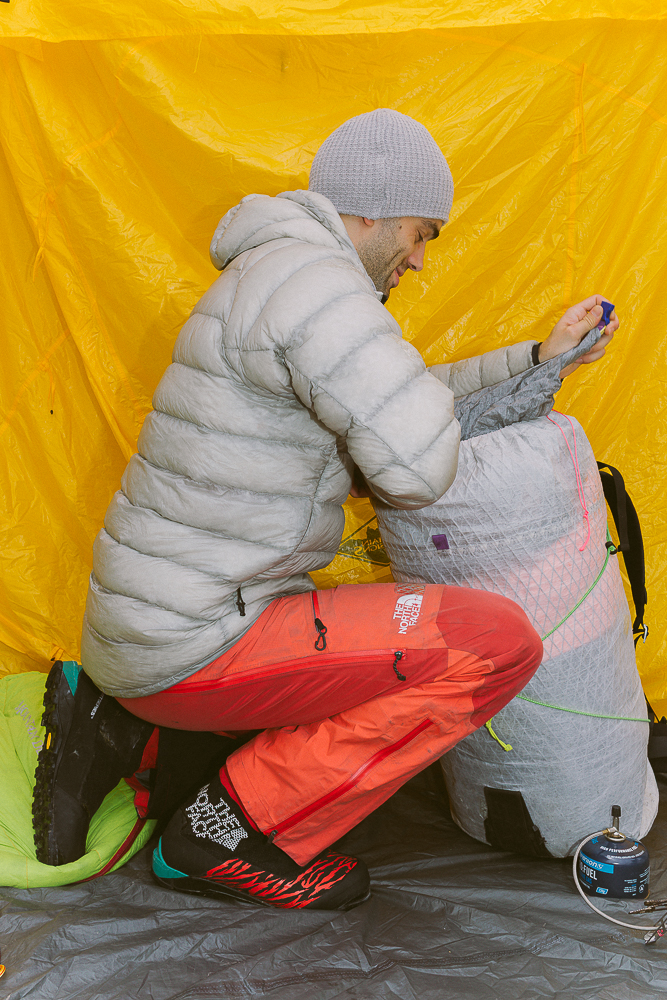
A great thing about Chhogori is that every climber who we’ve had the chance to collaborate with has ended up taking their pack on some pretty awesome expeditions. It would be cool to get some high-profile climbers using the gear in the future. We work on a range of prototyping capabilities, so I see a unique opportunity to bring some climbers on board by tapping into niches that are otherwise unsolved. Being able to work directly with athletes who are pushing standards on big alpine objectives would be incredible, since their feedback can rapidly drive the next iteration of design. Ideally, it becomes a relationship where we build gear that enables their projects, and in return, their experience helps refine and evolve what we develop.
Fit four
What goals do you have for the brand over the next five years?
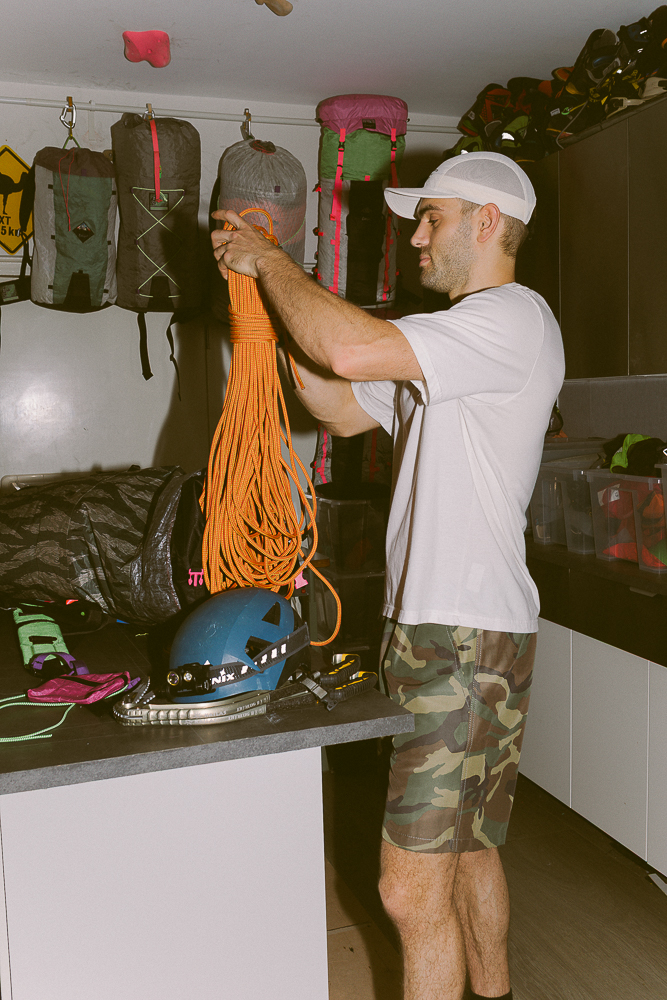
To keep pushing ideas further, get more creative and continue expanding the level of customisation we can offer. I’m keen to keep up our focus on prototyping and continue to work at that intersection of climbing, design and real-world testing.
When you’re not working, what do you do with your downtime? How do you chill out?
Downtime usually ends up being more climbing. Using the gear is a huge part of the research and development process, and many of the biggest design refinements happen when we are out in the mountains in our own time. A highlight of climbing off the clock is getting to head out with my girlfriend, Claudia. She loves travelling, so a lot of our trips end up becoming a mix of exploring, testing and climbing.
Fit five

Where are some of your favourite spots to shop?
Most of my clothing shopping happens at North Face outlets near Tokyo. The North Face Japan has some incredible Japan-only gear, and a lot of my outfits come from there.
Any clothing brands that you are loving right now and why?
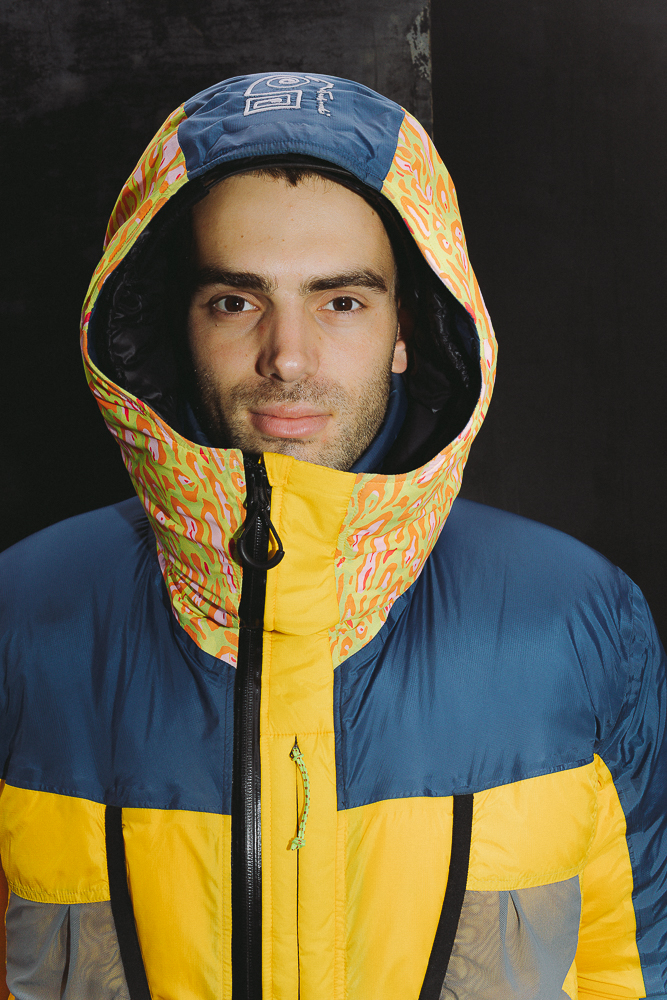
Malachowski is a standout. It is a Polish company with an incredible pedigree of equipping some of the world’s best climbers on some of the most impressive routes ever climbed. Their down gear is unmatched in quality and performance.
Where is your next big adventure?
Next up is the Gobi Desert for ice climbing with Feeding the Rat Expeditions. It is a pretty surreal place to see some amazing ice formations, with the extreme cold and barren landscapes, starkly contrasting the ice against its surroundings. After that, there will be a lot of alpine climbing in Japan, which is where we do most of our real-world testing. The winter conditions there give us consistent cold, mixed terrain and plenty of long days out, which makes it an ideal place to refine new designs.
What are the five essentials you put in a bag?
Essential items include a sketchbook, 0.1 pen, passport, 3mm accessory cord and sunglasses.
Follow Chhogori Designs on Instagram.
See more of our favourite ‘Five Fits With’ . . .
Le Specs creative director Hamish Tame