






Franck Muller breaks the mould again with their latest Mystery timepiece
It's a triple threat
IF THERE WAS ANY word that could sum up the world of Swiss watchmaker Franck Muller it would be “unconventional”. It’s a word that defies the ordinary, the literal refusal to conform. We see it in the audacious designs that have made their watches one of the most talked about in the industry. It’s also in their people.
Before he was the CEO of Franck Muller, Nicholas Rudaz was pouring champagne at the Sydney Opera House. He had worked behind bars before moving up to bigger stakes, managing hotels in Geneva. It was there that he first came across Franck Muller, housed in vitrines at one of the hotels he worked at.
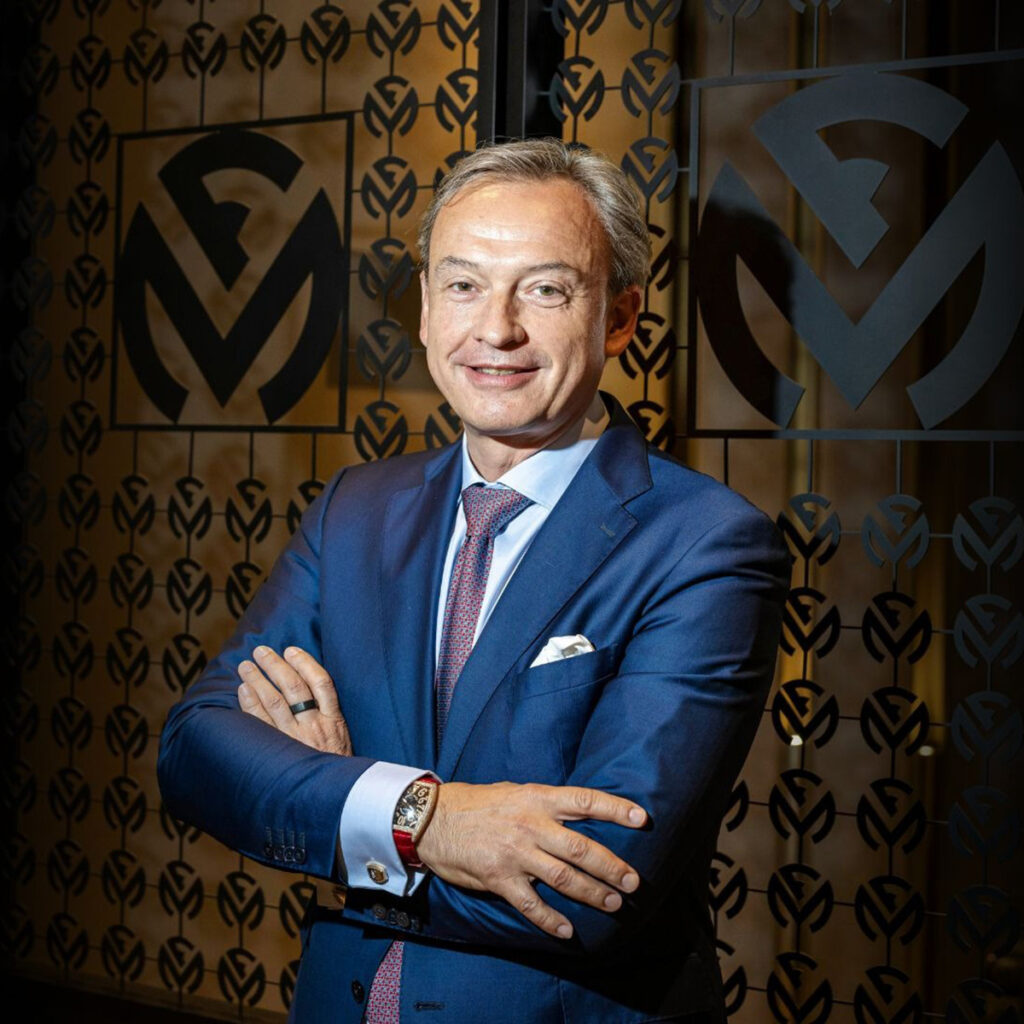
“I noticed how different those watches were at the time,” Rudaz recalls. “I noticed how successful and how the clients were eyeing these watches, and I admired them before I even imagined working at Franck Muller.”
It is an unconventional pathway into haute horlogerie, which perhaps explains why Rudaz feels so at ease leading a brand that has never behaved like its peers. Franck Muller has built its identity on standing apart – that aforementioned unconventional philosophy. That disposition finds its clearest expression in the Round Triple Mystery, a watch that extends one of the house’s most recognisable concepts while reinforcing its role as an outlier within contemporary Swiss watchmaking. But to understand its present, you also need to understand Franck Muller’s past.
Founded in 1991, Franck Muller remains relatively young by industry standards, but Rudaz sees that as an advantage. “I think very much the first modern watchmaker to position a brand and make it not only complicated, but also cool,” he says. The phrasing is deliberate. The brand was born during a period of industry disruption, when mechanical watchmaking itself was in question.
“When you start a watch brand in such a crisis period, you don’t know which way it’s going to go,” Rudaz says, referring to the early 1990s. “With the rare complications, with the boldness, with the creativity, with the design, well, we managed to create something very much unique and unheard of before.” That willingness to take risks, rather than protect tradition, would become a defining trait.
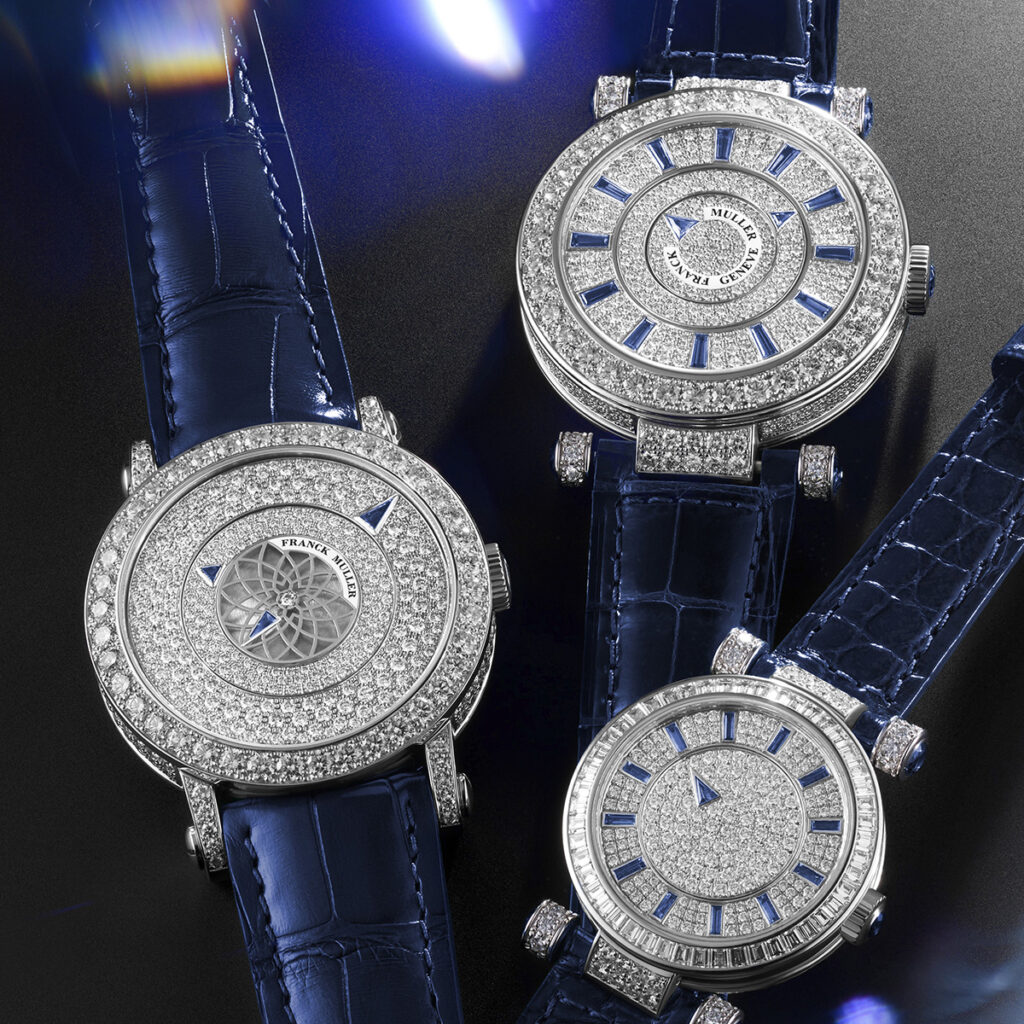
The Mystery watch is one of the clearest examples of that mindset. First introduced with a single rotating disc to display the hour, it removed traditional hands entirely. The Double Mystery followed, adding a second disc for the minutes. With the Round Triple Mystery, Franck Muller completes the sequence by introducing a third rotating disc for seconds, creating a display built entirely on motion.
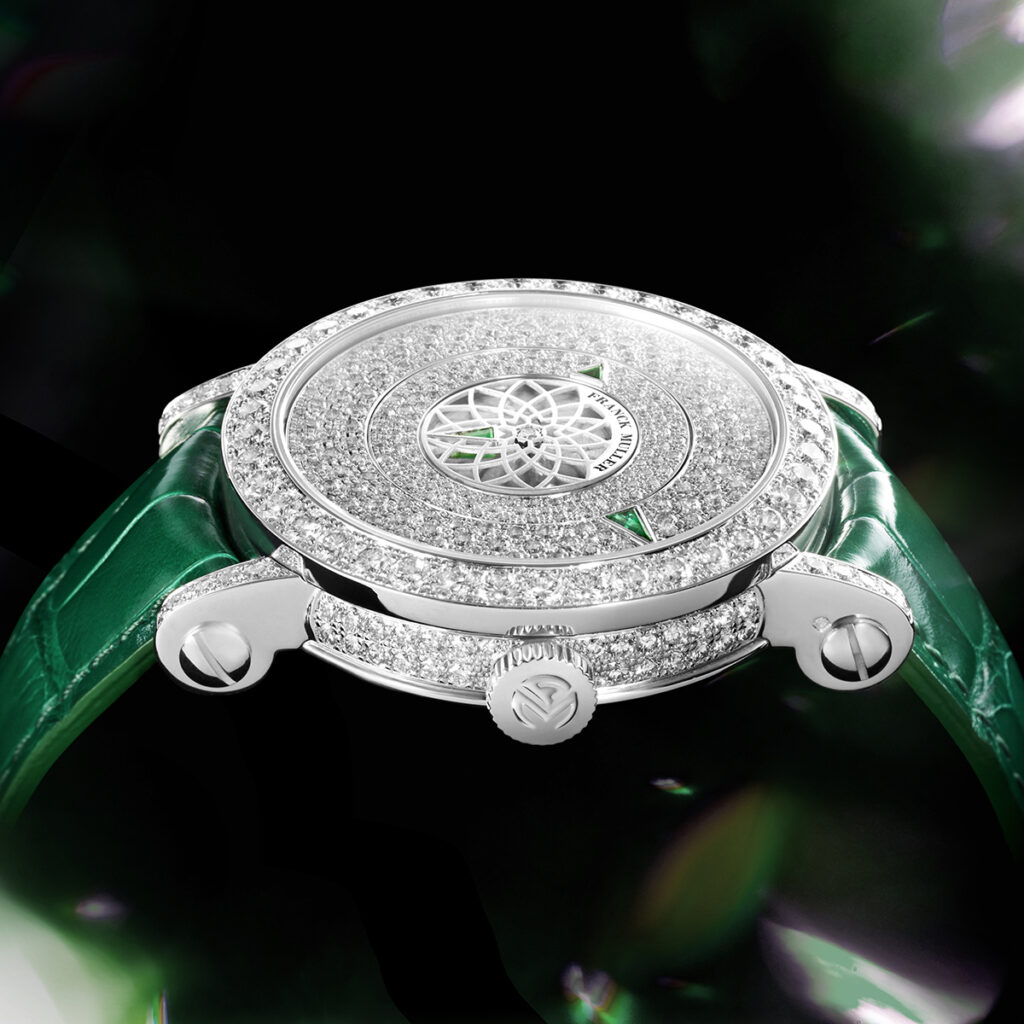
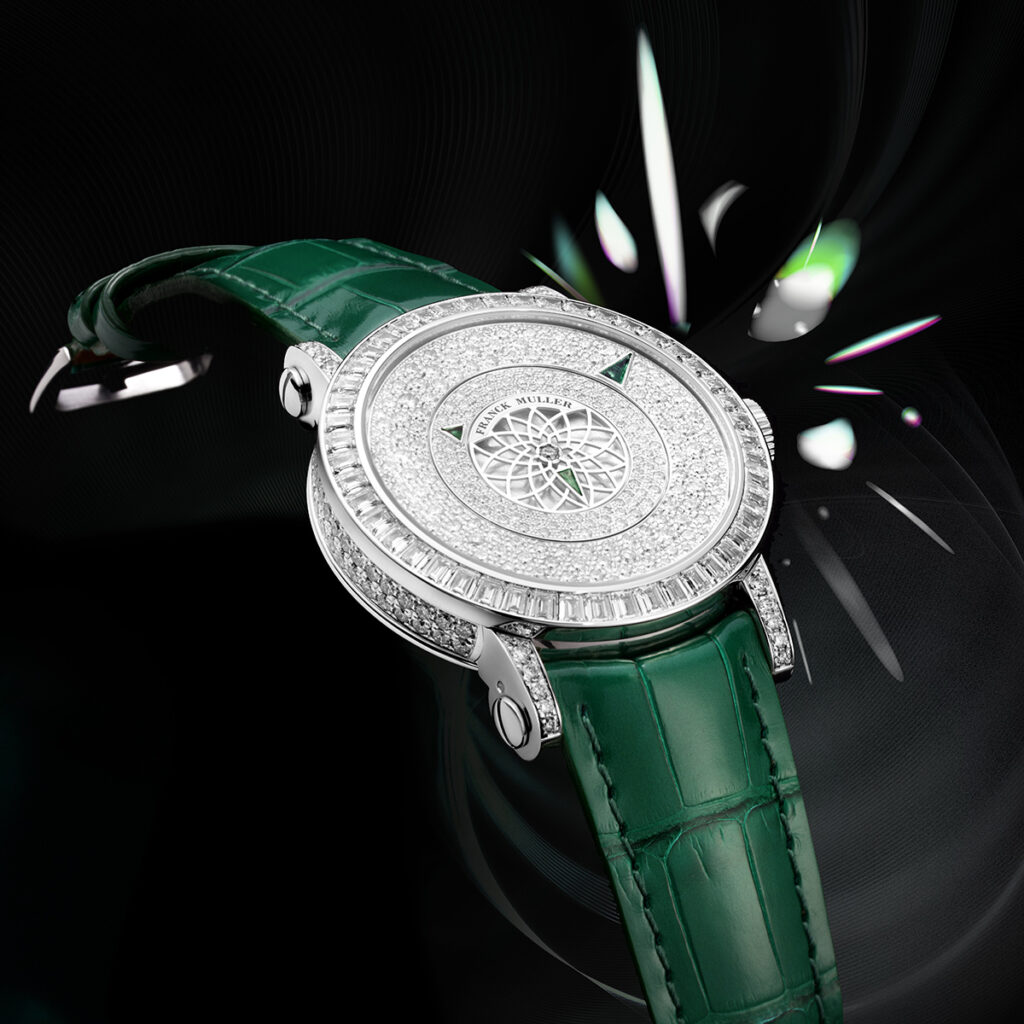
“At first glance, the dial seems to float in motion, its display untethered by traditional hands,” the press release observes. In practice, the effect is both legible and unfamiliar. Hours, minutes and seconds are indicated by triangular markers mounted on three independent rotating discs, producing a reading of time that requires engagement rather than habit.
The technical challenge of adding a seconds disc was substantial. According to the press release, simply introducing a third rotating element would have dramatically increased energy consumption. Franck Muller’s solution was to skeletonise the seconds disc to reduce mass while maintaining rigidity. The entire seconds structure weighs just 0.052 grams, with the arrow indicator at 0.002 grams, the diamond at 0.003 grams and the skeletonised pastille at 0.047 grams.
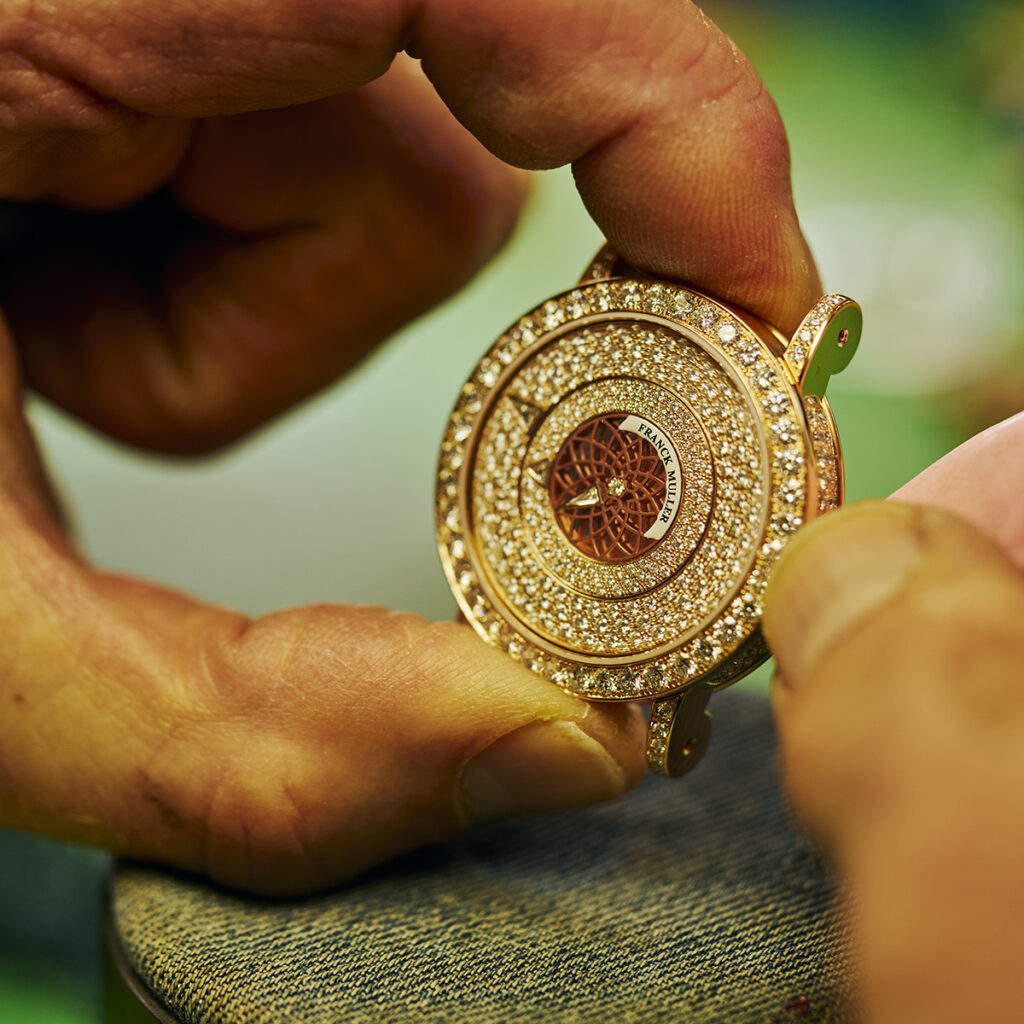
After extensive material testing, aluminium was selected for the seconds disc to balance lightness and structural stability. Machining the component required extreme precision, with bridges measuring just 0.3 millimetres in width. These decisions were driven by necessity rather than ornament, even if the final result appears decorative.
For Rudaz, this interplay between design and engineering is foundational. “Design and complication, those two pillars are our language. That’s our DNA,” he says. “We want to push the boundaries of watchmaking.” He is also candid about the consequences. “You cannot please everyone, but I think people who wear Franck Muller wear it with pride and to be different.”
Independence underpins that freedom. Franck Muller manufactures entirely in-house at Watchland in Genthod, Geneva, producing movements, dials and straps internally. “We don’t have to worry about shareholders,” Rudaz says. “There’s nobody else out there to please. So we can continue to buy gold, to buy precious stones, to push the drawings in every direction.”
The Round Triple Mystery reflects that latitude. The 39mm case is available in 18k rose gold or white gold, measuring 10.05mm in thickness and water-resistant to 30 metres. The case is hand-polished and set with 120 brilliant-cut diamonds totalling 3.90 carats. The dial features 237 brilliant cut diamonds totalling 1.96 carats, arranged in a spiral pattern that draws focus toward the rotating discs.
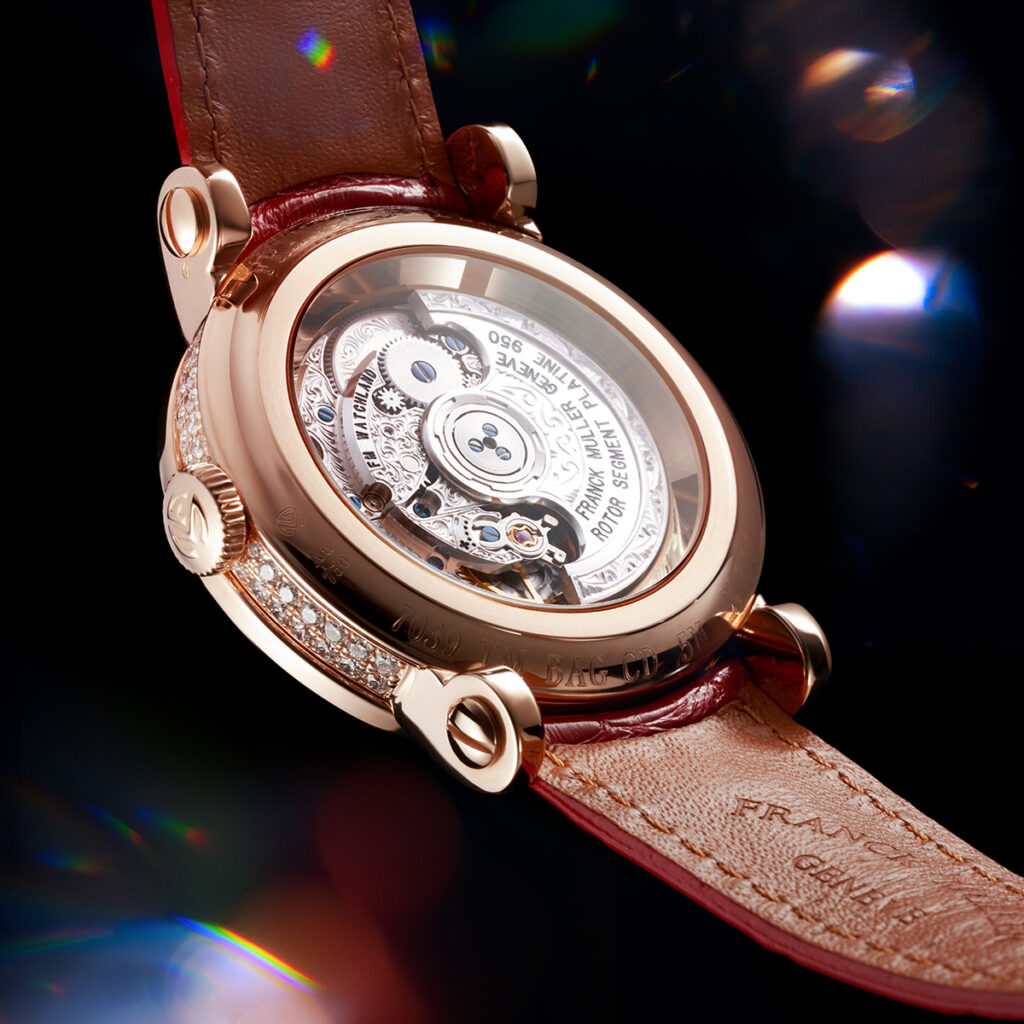
Three triangle cut indices indicate hours, minutes and seconds, offered in diamond, emerald, ruby or blue sapphire. A baguette set bezel version adds 48 baguette-cut diamonds totalling 4.92 carats. Power comes from the MVD 2800-TMY automatic movement, composed of 217 components, beating at 28,800 vibrations per hour with a 42-hour power reserve. The movement is fully finished with engraving, perlage, bevelled edges, diamond-polished sinks and multiple brushing techniques.
The idea for the Triple Mystery did not come from a long-term roadmap. “The original idea came from our distributor in Asia Pacific,” Rudaz says. “He said, ‘Oh, you should do a triple mystery.’” Development took a year. The result is a watch that feels aligned with both the brand and its CEO. Neither arrived by the traditional route, and neither shows much interest in conforming now.
Related:
The story behind Michael B. Jordan’s rare “Hour Glass” Patek Philippe watch
Chris and Liam Hemsworth ring in the New Year with an AP and a Rolex